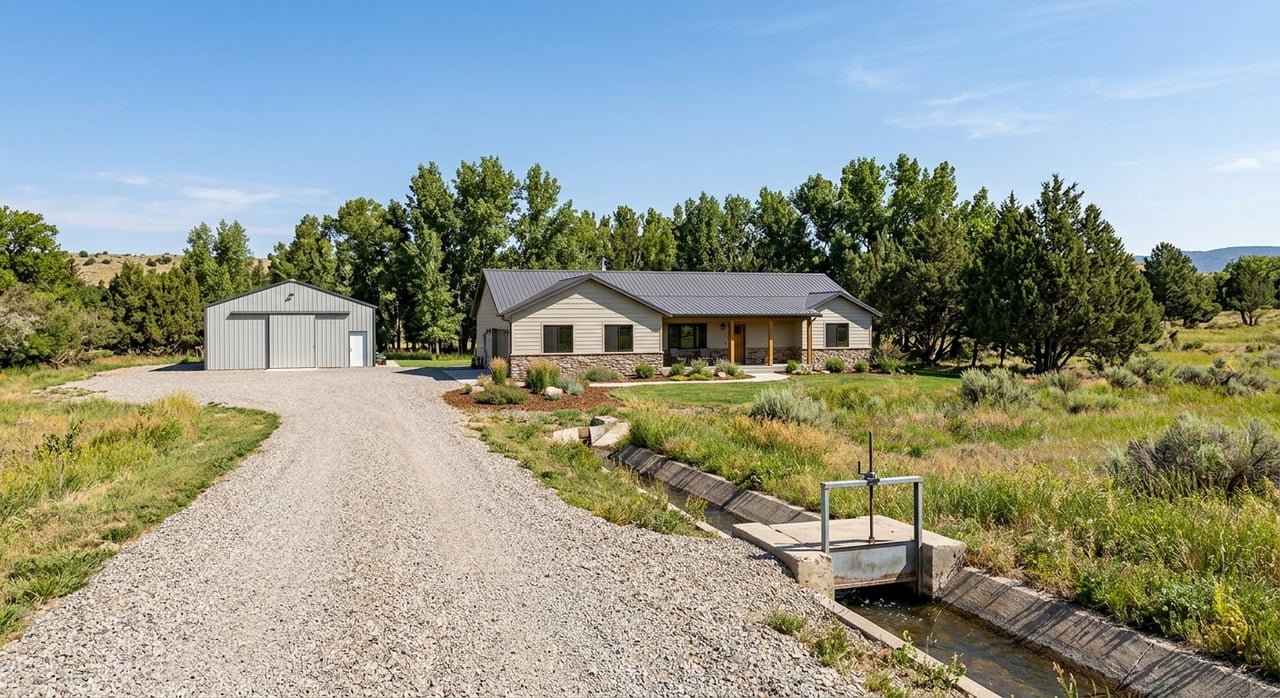
If you are dreaming about a little more elbow room in Kuna, you are not alone. Acreage and hobby-farm properties can offer space for animals, outbuildings, gardens, and a quieter lifestyle, but they also come with more layers than a typical suburban home purchase. If you want to buy smart, you need to know how zoning, irrigation, wells, septic, access, and financing all connect before you write an offer. Let’s dive in.
Why Kuna acreage is different
Buying acreage in Kuna is not just buying a house with a bigger yard. A property may be inside Kuna city limits, inside the Kuna area of city impact, or outside both in unincorporated Ada County, and that location affects which rules and agencies apply.
That matters because the parcel’s jurisdiction can shape zoning, subdivision rules, utilities, and approvals. A Kuna mailing address alone does not tell you which standards apply, which is why parcel-level research is one of the first steps in the process.
Start with parcel jurisdiction
Before you focus on barns, fencing, or future plans, confirm where the parcel actually sits. According to Kuna’s development-code materials, land inside the area of city impact may still involve Ada County zoning rules, and subdivision plats inside the ACI must also go through city review.
A helpful starting point is Ada County’s planning-area map, which can help identify a parcel’s jurisdictions, service providers, and zoning references. Kuna also offers a GIS mapping page with zoning, future land use, and irrigation mapping that can help you verify parcel-specific details.
Why the ACI matters
The Kuna area of city impact can create a gray area for buyers who assume rural means county-only rules. Kuna’s code materials explain that parcels split by the ACI boundary are generally treated based on the larger portion of the parcel.
In practical terms, that means your plans for a home, shop, animals, or future division may depend on more than the listing description. You want to verify the exact parcel status early, not after inspections begin.
Check zoning before you fall in love
For hobby-farm buyers, zoning is one of the biggest gatekeepers. Kuna’s development-code materials describe an Agriculture district intended to protect agricultural land and reduce encroachment from urban development, and those materials state agricultural parcels are generally required to be at least 5 acres.
That does not mean every 5-acre parcel automatically supports every rural use you have in mind. Kuna’s land-use table shows that farm-related uses such as farm animals, farm machinery, feed stores, and ranch support uses can be allowed differently depending on the zoning district.
Ask use-based questions
When you look at acreage, it helps to ask very specific questions, such as:
- Can you keep the type and number of animals you want?
- Can you build a shop or other accessory structure?
- Is the parcel intended to remain intact, or could it support a future split?
- Are any uses allowed by right, or would they need additional approval?
Those answers depend on the parcel’s exact zone and any related overlays or review requirements. This is one reason acreage purchases benefit from a careful, step-by-step due diligence plan.
Understand water and irrigation
Water is often one of the biggest differences between a typical home purchase and a rural property purchase. In Kuna, irrigation may be a separate issue from household water service, and buyers should not assume that because a property has land, it automatically has usable irrigation rights or delivery.
The Idaho Department of Water Resources explains that irrigation districts and private irrigation companies are formal water-delivery entities with defined service areas, ownership structures, and assessments. You can verify boundaries through the IDWR irrigation organizations resource.
City irrigation may apply in some areas
Kuna also notes on its Water & Irrigation page that the city operates wells, pumps, hydrants, and irrigation service, with utility billing handling water, sewer, trash, and irrigation questions. Depending on the exact parcel, you may have city utilities, irrigation service, private systems, or some combination of them.
That is why one of the smartest early questions is simple: How is this property actually watered? For acreage and hobby-farm use, that answer can affect your costs, maintenance, and day-to-day function.
Review wells carefully
If a parcel depends on a private well, do not treat that as a minor detail. The Idaho Department of Water Resources wells guidance says a drilling permit is required before drilling any well in Idaho, and wells must be constructed by a licensed well driller.
IDWR also states that domestic wells do not require a water right if they meet domestic or de minimis exemption criteria, while irrigation, commercial, industrial, multifamily, and municipal wells do require a water right or permit before a drilling permit can be issued. For a buyer, that means the intended use of the well matters.
Private well testing is your responsibility
The Idaho Department of Health and Welfare says private well owners are responsible for water safety because private wells are not regularly monitored like public systems. The agency recommends annual testing for bacteria and nitrates and testing every 3 to 5 years for other contaminants.
If you are buying acreage in Kuna, ask whether the well is permitted and whether recent testing is available. That is especially important if the well will support your household, outdoor use, or animals.
Do not overlook septic
On many acreage properties, septic is one of the most important items in the file. In Ada County, Central District Health handles septic permitting, reviews land development applications, and maintains septic records that date back to 1971, though some older records may not be available. You can start with Central District Health’s water, wastewater, and septic information.
The Idaho Department of Environmental Quality also explains that public health districts permit and inspect septic systems, conduct site evaluations, and recommend that buyers get a site evaluation before purchasing property and applying for a permit. If a property cannot support the septic system needed for your plans, the rest of the project can hit a wall fast.
Septic can affect buildability
This is especially important if you are buying vacant land or a parcel with plans for expansion. Septic suitability often affects whether a future home or improvement can move forward.
It is wise to ask for any existing permits, system details, repair history, and site evaluations before you commit. Lenders may also want documentation tied to well and septic locations during the transaction.
Confirm access and easements
A beautiful parcel is not enough if access is unclear. Ada County’s assessor states that parcel records include parcel boundaries and road rights-of-way, but the office does not track easements, and deeper access questions may require a plat, survey, or title review. You can review this through the county’s property records resources.
This matters for daily use, future construction, resale, and financing. If access is informal, poorly documented, or dependent on unverified assumptions, it can create delays and added risk.
Access can affect financing too
Fannie Mae’s general property eligibility rules state that it does not purchase or securitize mortgages on properties that are not readily accessible by roads that meet local standards. So even if land looks usable, access issues can become a loan issue.
For acreage buyers, legal and functional access is not just a title question. It is also a practical and financial question.
Think ahead about future flexibility
Some buyers want acreage for privacy today. Others also want future options, like adding a shop, building another structure, or splitting land later.
Ada County notes that some properties may qualify for a one-time division if both resulting parcels meet minimum dimensional standards for the zoning district, including size and frontage. That means if future flexibility matters to you, it is worth asking about it before closing, not years later.
Know the financing differences
Financing acreage and hobby-farm properties is often more nuanced than financing a standard neighborhood home. Some rural Kuna properties may fit USDA financing, while others may need a more conventional or specialized approach depending on how the property is used.
The USDA Section 502 Guaranteed Loan Program offers 100% financing for eligible rural homebuyers who meet occupancy and income rules. USDA states there are no set acreage limits, but the property must be your primary residence and cannot be income-producing.
When conventional financing gets harder
Fannie Mae says it does not purchase or securitize mortgages on agricultural properties such as farms or ranches, vacant land, or land-development properties. It also flags concerns when a property has significant nonresidential use.
The practical takeaway is that a residential acreage parcel may still be financeable with conventional lending, but the more the property functions like an operating farm, the more likely you may need a different loan product or more specialized underwriting.
A smart Kuna acreage checklist
If you are serious about buying acreage or a hobby farm in Kuna, use a simple order of operations:
- Verify the parcel location and jurisdiction.
- Confirm zoning and allowed uses.
- Check irrigation service or irrigation organization boundaries.
- Review well permits and recent water testing if applicable.
- Review septic records, permits, or site evaluations.
- Confirm legal access and any recorded easements.
- Talk with your lender about financing based on the property’s actual use.
This sequence lines up well with how local city, county, water, health-district, and lending systems are organized. It can also help you avoid spending time and money on a property that does not fit your goals.
Why local guidance matters
Kuna acreage purchases often look straightforward at first glance, but the details are where deals either stay on track or get complicated. A parcel can have the right size and the right setting, yet still raise questions about zoning, irrigation, septic, or access.
When you have a local advisor who understands both Treasure Valley residential transactions and rural-property due diligence, you can move forward with more confidence. If you are considering acreage or hobby-farm property in Kuna, Connie Boyce can help you navigate the process with the kind of attentive, relationship-first service that makes complex purchases feel more manageable.
FAQs
What should I verify first when buying acreage in Kuna, Idaho?
- Start by confirming whether the parcel is in Kuna city limits, the Kuna area of city impact, or unincorporated Ada County, because that affects zoning, utilities, and approvals.
How much land is usually needed for agricultural zoning in Kuna?
- Kuna’s development-code materials state that agricultural parcels are generally required to be at least 5 acres, but you still need to confirm the parcel’s exact zoning and allowed uses.
Do Kuna hobby-farm properties always include irrigation rights or service?
- No. Irrigation should be verified separately because service may come from the city, an irrigation district, a private irrigation company, or not be available in the way you expect.
What should I know about private wells on Kuna acreage?
- You should confirm the well was properly permitted, understand whether the intended use affects water-right requirements, and review recent water-quality testing because private well owners are responsible for water safety.
Why is septic so important for Kuna land and acreage purchases?
- Septic suitability can directly affect whether a parcel can support a home or future improvements, so permits, records, and site evaluations are important parts of due diligence.
Can acreage in Kuna qualify for USDA financing?
- Some properties may qualify if they meet USDA rural eligibility rules, will be owner-occupied as a primary residence, and are not income-producing properties.