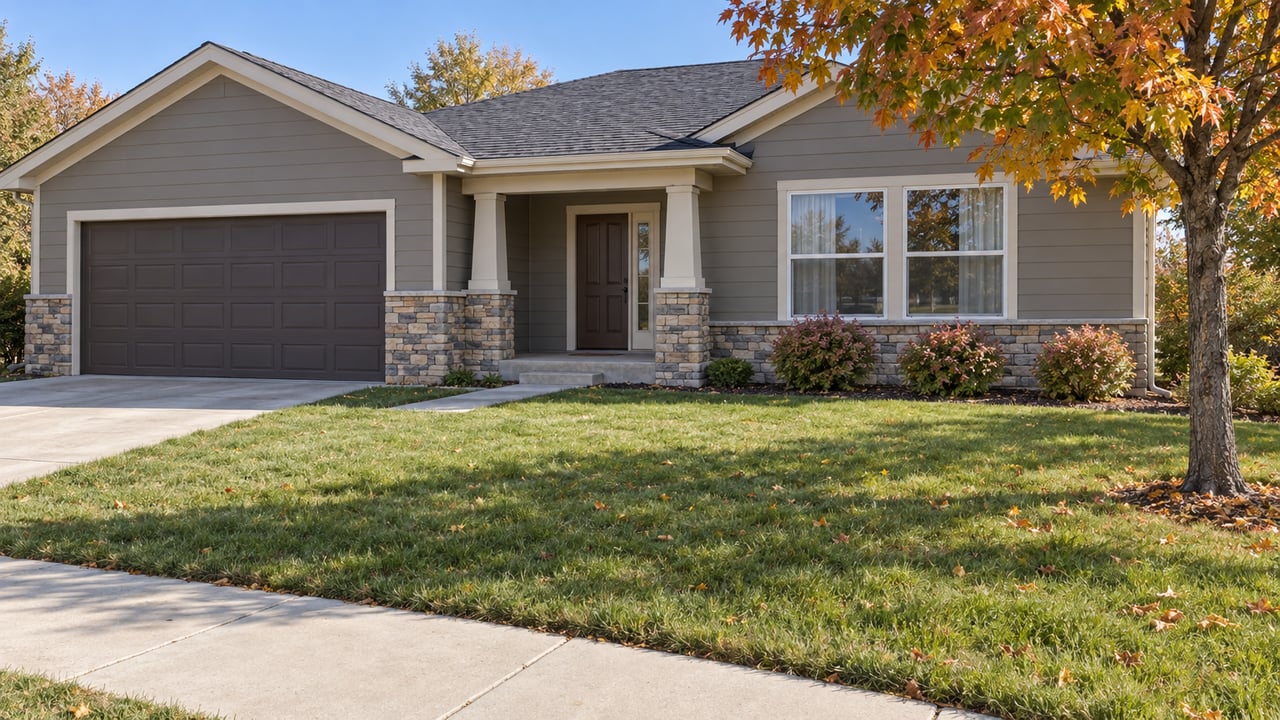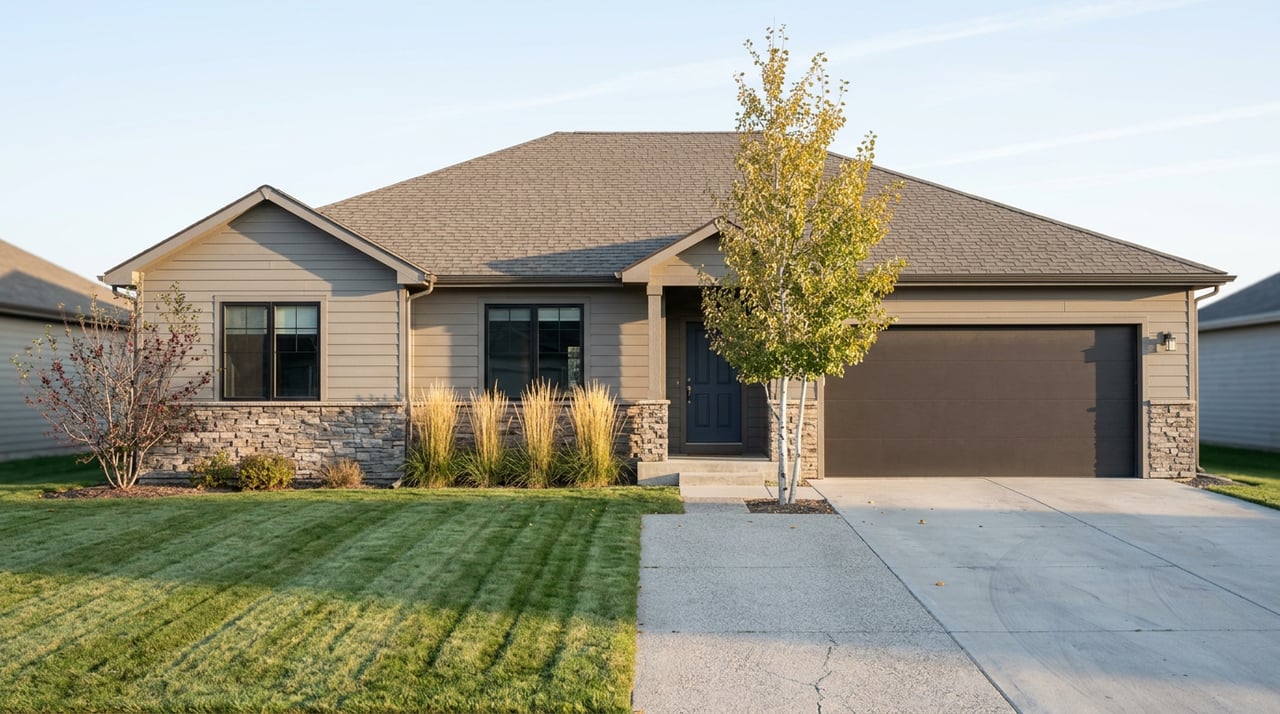
A builder's price sheet in Star still shows the same base numbers it showed a year ago. Some of the costs beyond that base price changed in the last six months.
If you've been comparing a new-construction listing in Star against something similar in Eagle or Meridian, the base price alone doesn't show the full cost. Star just raised its own impact fees, on top of a county-wide fee increase that took effect in March, on top of a transportation fee still being recalculated after an arithmetic error in the fee table was identified. These fees may be included in the builder's quoted price or charged separately, so ask which applies.
Fees Beyond the Base Price
New construction anywhere in Ada County carries impact fees, one-time charges builders pass through to cover the cost of roads, parks, and public safety that new rooftops require. In Star, that stack has four separate layers right now, and two of them moved this year.
| Fee | Amount (single-family home) | Took effect | What it funds |
|---|---|---|---|
| ACHD roadway impact fee | $5,803 | March 1, 2026 | County-owned roads, intersections, and bridges across Ada County |
| City of Star parks and police impact fee | +$4,500 | Approved April 2026, park portion phased in over three years | New parks, recreation facilities, and equipment for new police officers |
| Highway District 4 (Midstar) transportation fee | Not yet finalized | Plan adopted March 2026; CitizenPortal reports the fee table was sent back for correction | 33 intersections and 16 roadway corridors inside the Midstar service area |
| ITD proportionate-share assessment | According to CitizenPortal, $1,000 | Ongoing since a 2020 agreement | SH-16 and SH-44 corridor work, including the new interchange |
The Ada County Highway District's board voted 4-1 in December 2025 to raise its countywide fee schedule for the first time since 2022, and the new numbers took effect March 1. That fee alone jumped to $5,803 for a single-family home, funding a capital plan that identifies $1.2 billion in road projects tied to growth across the county.
As BoiseDev reported, Star's own city council went further in April 2026. Council members unanimously approved a fee package that adds $4,500 to the cost of a new home, split between parks and police. Homebuilders and the Building Contractors Association of Southwest Idaho fought it for more than three hours at the public hearing before it passed.
And the fourth layer, the Highway District 4 transportation fee, isn't even settled yet. City engineers presented an updated capital plan in March that pegs $184 million in road projects tied to growth in the Midstar service area, with $131 million of that eligible for impact fees. A council member caught an arithmetic error in the fee table during the meeting, and the council adopted the plan but sent the fee numbers back for correction. If you're pricing a build in Star this fall, that fourth number is still moving.
Why Star Is Doing This Now
None of this is arbitrary. Star's population has roughly doubled since the 2020 census, and the city collects almost none of that growth back in property tax. According to the city's own FY2025-2026 budget presentation, only about 8.3% of Star's projected revenue comes from property taxes. The rest comes from fees, impact fees, and state revenue sharing.
That's by design, and not entirely the city's own design. That left Star with fewer levers to pull. Mayor Trevor Chadwick, a Republican, said as much when he pushed back on the legislature during the April hearing:
"We need the community's help to put the pressure on the legislature because the legislature is failing us."
— Mayor Trevor Chadwick, as quoted by BoiseDev.
The mechanics are straightforward even if the politics are heated. When a city needs new fire stations, park land, and police cars for the people moving in, fees can help cover those costs. That's the fee stack you're reading in the table above.
The Builders Didn't Take It Quietly
The pushback matters because it tells you where the ceiling might be. The Building Contractors Association of Southwest Idaho brought in an outside expert from Arizona to argue that parts of Star's original fee proposal, at one point framed as a $63 million package, went beyond what Idaho's impact fee law allows. Their objections centered on how the city calculated the cost of buying new property, whether leased space for community recreation programs could be included, and how existing equipment was valued.
The council didn't cave, but it did scale back. The parks portion of the new fee phases in gradually, at 80%, 90%, and then 100% of the full rate over three years, rather than hitting all at once. That's a meaningful detail if your build timeline stretches into 2027 or 2028: the fee you pay may depend on exactly when your permit is pulled, not just where you buy.
What This Means If You're Comparing Star to Eagle or Meridian
Here's the part that actually affects your budget. Two homes listed at the same base price, one in Star and one in Eagle or Meridian, are not necessarily the same total cost anymore. Star's fee stack has moved twice in six months, and a fourth piece of it is still being calculated. That's not automatically true of every neighboring city, and it's worth asking your builder directly which fees are baked into the price you're being quoted versus added at closing.
It also cuts the other way. Some of the new-construction inventory in Star right now comes with builder-funded incentives, rate buydowns and closing-cost credits rather than reductions to the base price. That's a common industry pattern when builders would rather protect their comparable sale prices than cut sticker prices outright. A quoted price that looks identical to last year's listing can still represent a very different total cost once you add the incentive on one side and the fee increase on the other. The only way to know which way that nets out is to ask for both numbers in writing before you sign anything.
The Road Under Construction Adds Its Own Cost
There's a timing question too. Construction began in 2025 on a new interchange where State Highway 16 meets State Highway 44 in Star, part of what the Idaho Transportation Department has called the first new freeway built in Idaho in four decades. It's expected to wrap up in 2027. Until then, drivers through that corridor should expect lane closures and delays, particularly at rush hour.
If you're looking at a subdivision near that corridor, ask how your daily commute route interacts with active construction zones over the next year or so. It won't change what you pay in impact fees, but it will change what your first year of ownership actually feels like.
Questions Worth Asking Before You Sign
- Is the Highway District 4 transportation fee finalized for this subdivision yet, or is it still pending the correction the council ordered in March?
- Does the builder's quoted price already include the current ACHD and city impact fees, or are those added separately at closing?
- If the community is phased, which section are you buying into, and does your closing date fall before or after the next phase of the parks fee increase?
- Is any rate buydown or closing-cost credit being offered in place of a lower base price, and how does that compare dollar for dollar?
A Few Quick Answers
Are these fees listed separately? Not always. The cost may be built into what they charge you. It's rarely broken out as its own line on a builder's price sheet, which is exactly why it's worth asking about directly.
Will these fees keep rising? Star's population growth shows no sign of slowing, and the city's revenue structure hasn't changed. Whether fees rise again is still an open question.
Comparing new and existing homes in the same neighborhood takes more than list prices.
Comparing a new build in Star against something in Eagle or Meridian takes more than a side-by-side of base prices. If you want a second set of eyes on what a specific builder's quote actually includes, or how the numbers compare across the cities you're weighing, Connie Boyce has spent more than a decade watching exactly this kind of shift play out across the Treasure Valley and is glad to walk through it with you.
This article is general information, not legal, tax or financial advice. Consult a qualified professional about your situation.